
The Best Oils for Air Frying (and Which to Avoid)
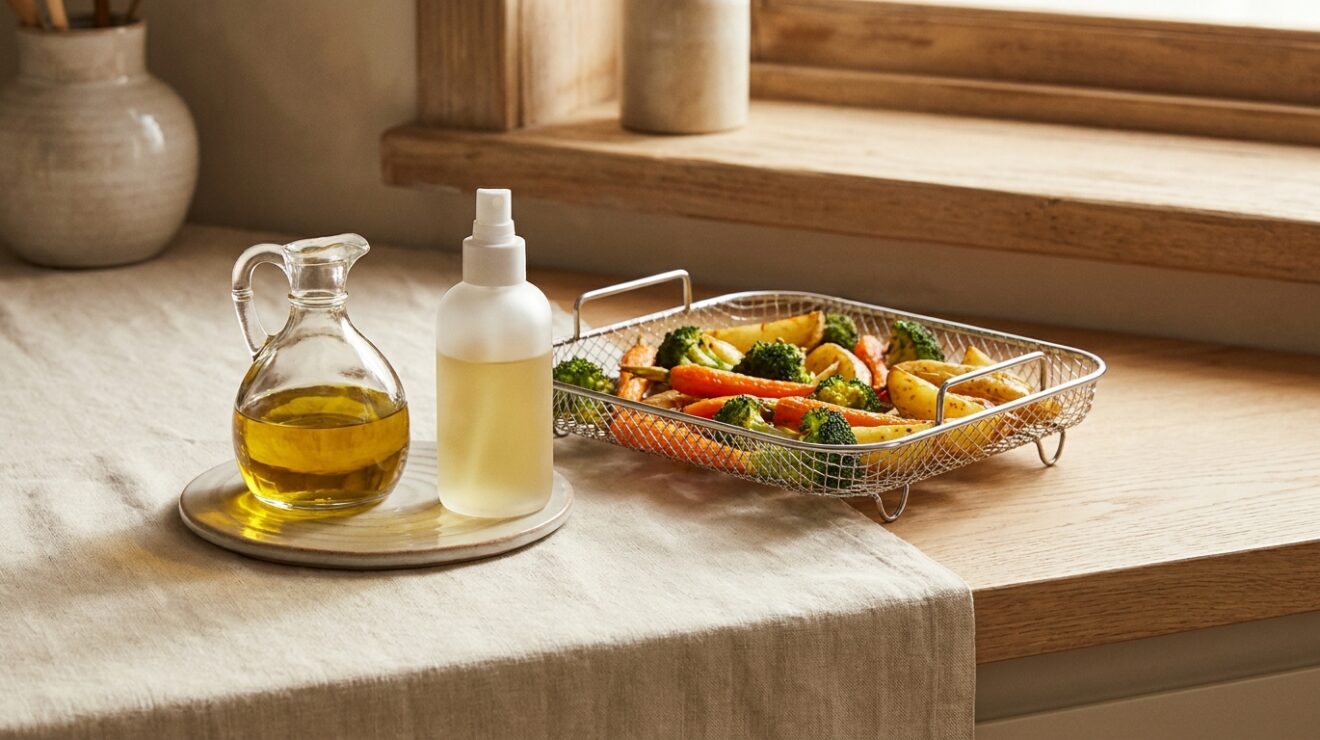
One of the best things about an air fryer is how little oil you actually need compared to a deep fryer or a heavy skillet. But let’s be honest—you still need a little bit.
A light kiss of oil is the secret ingredient that carries heat directly into the surface of your food, giving you that perfect, golden crunch. The trick is simply picking an oil that can handle the heat without smoking up your entire kitchen.
Here is the best oil for air fryer cooking: what to reach for, what to leave in the pantry, and the best way to get that perfect crispy finish.
Why the “Smoke Point” is Everything
Every cooking oil has a smoke point—which is exactly what it sounds like: the temperature where the oil stops shimmering, starts breaking down, and begins billowing smoke. It also gives your food a weird, bitter taste.
Since air fryers regularly blast your dinner with 180–200°C (350–400°F) air, you absolutely need an oil that can hold its own at those high temperatures.
The Best Oil for Air Fryer Cooking
- Avocado oil: The absolute gold standard. It has a ridiculously high smoke point and a super mild flavor. It is my favorite all-rounder, if you don’t mind spending a few extra dollars.
- Refined / light olive oil: Notice the “refined” part—this is not your fancy extra-virgin stuff. It handles high heat beautifully and has a clean, neutral taste.
- Sunflower oil: A fantastic everyday choice. It has a high smoke point, it is cheap, and it won’t mess with the natural flavor of your food.
- Vegetable / canola (rapeseed) oil: The trusty kitchen workhorse. It is affordable, perfectly neutral, and can handle almost anything you throw in the basket.
- Peanut (groundnut) oil: High heat tolerance with a very subtle, nutty vibe. It is phenomenal for homemade french fries and stir-fry-style veggies.
- Ghee (clarified butter): Unlike regular stick butter, the milk solids have been scooped out of ghee. That means it can take the heat while still giving your food a rich, deeply buttery flavor.
Oils to Avoid (or Use Very Carefully)
- Extra-virgin olive oil at high heat: We all love the flavor of EVOO, but it has a frustratingly low smoke point. It’s fine if you are gently roasting something under 180°C, but don’t use it to blast potato wedges at 200°C. Save the good stuff to drizzle on after your food is cooked!
- Butter on its own: Plain butter is packed with milk solids that will burn and smoke instantly in an air fryer. Brush it on right at the very end instead.
- Unrefined / cold-pressed oils: Things like flaxseed oil or virgin coconut oil are fantastic in a salad dressing, but they fall apart under high heat.
- Aerosol cooking sprays: This is a big one. Canned, aerosol non-stick sprays usually contain harsh additives (like propellants and emulsifiers) that leave a sticky, gummy residue. Over time, that residue permanently ruins your basket’s non-stick coating. Get yourself a cheap, refillable pump mister instead.
How to Apply Oil the Right Way
- Toss, don’t pour: The best method? Toss your veggies or wings in a mixing bowl with a teaspoon or two of oil, give it a good shake, and then put them in the basket. It gives you the most even crunch using the least amount of oil.
- Brush it on: For bigger things like a whole chicken breast or corn on the cob, a silicone pastry brush works wonders.
- Mist it: A refillable oil sprayer is perfect for laying down a super fine, even mist on chips and delicate vegetables.
- Aim for the food: Whatever you do, apply the oil to the food, not the basket. Oil pooling on the bare metal is just asking for smoke.
How Much Oil Do You Actually Need?
Honestly, not much. For a standard basket of food, a single teaspoon to a tablespoon is plenty.
And remember: naturally fatty foods (like chicken thighs, bacon, sausages, or well-marbled steaks) don’t need a single drop. They bring enough fat to the party all on their own! The same goes for most frozen, breaded convenience foods.
My Side-by-Side Oil Test
I wanted to see the smoke-point thing for myself, so I cooked two identical trays of potato wedges at 200°C (400°F)—one tossed in extra-virgin olive oil, one in avocado oil. The EVOO tray started smoking at around the seven-minute mark and the wedges came out with a bitter, scorched edge. The avocado batch cooked clean the whole way through and tasted the way wedges should. Same potatoes, same time, completely different dinner.
The other thing I learned the expensive way: aerosol cooking spray wrecks a basket. My first air fryer developed sticky, patchy spots on the non-stick coating within a few months, and the culprit was the canned spray. I switched to a refillable pump mister filled with avocado oil, and my current basket still looks new.
Common Oil Mistakes
- Pouring instead of tossing. Puddled oil in the basket is the fastest route to smoke—toss food in a bowl with a teaspoon or two first.
- Oiling the basket, not the food. The food is what needs the thin coat; bare oiled metal just burns.
- Adding oil to already-fatty foods. Bacon, sausages, chicken thighs and breaded frozen snacks bring their own fat—skip it.
- Trusting aerosol sprays. Convenient, but the propellants degrade your coating over time.
Frequently Asked Questions
Can I use olive oil in an air fryer?
Absolutely—just grab the right bottle. Stick to refined or “light” olive oil for actual cooking. Save your expensive extra-virgin olive oil for finishing and dressing, since its lower smoke point doesn’t love the intense heat.
Do I really need to use oil at all?
Not always! If you are cooking fatty meats or pre-cooked frozen snacks, you can skip it completely. But if you are tossing in fresh veggies or lean chicken, a light coating is what gives you that gorgeous, crispy, golden finish instead of a dry, leathery texture.
Why does my air fryer smoke as soon as I add oil?
You probably added a bit too much, or you used an oil with a low smoke point. Next time, use a lighter hand, pick a high-heat oil like avocado or canola, and make sure you are oiling the food itself, rather than letting puddles form in the bottom of the basket.
Still dealing with a smoky kitchen? Check out our guide on Why Does My Air Fryer Smoke? 5 Causes and Quick Fixes. Ready to get cooking? Browse our latest air-fryer recipes.